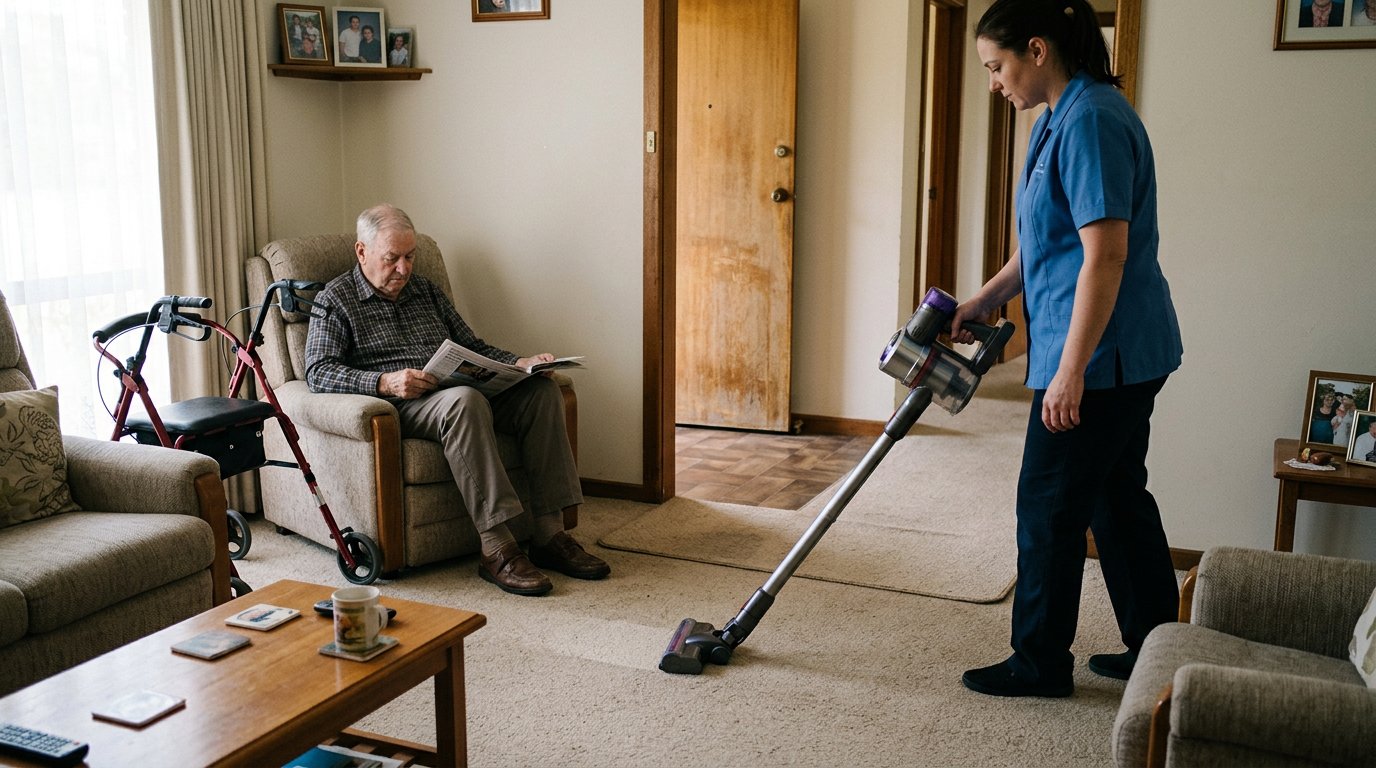
NDIS funding can cover house cleaning when household tasks are included in your plan as a reasonable and necessary support. NDIS cleaning services may cover everyday jobs such as vacuuming, mopping and dusting. The tasks and visit frequency should reflect your needs, helping ease the pressure of keeping your home safe and comfortable.
It can be hard to know how household help fits your plan or how often to arrange it. This guide explains what NDIS-funded cleaning may cover, how to tailor its frequency, what to consider when choosing a provider and how to identify the tasks that matter most in your home, from clearing pathways to managing dust.
Key Takeaways
- Learn when household cleaning may fit your NDIS plan and which everyday tasks could be relevant.
- Understand how your support needs and cleaning priorities can shape visit frequency.
- See what to consider when choosing a provider, from plan arrangements to a clear cleaning scope.
- Discover how The Village (NDIS) may help ease the load of keeping your home comfortable.
Can I use my NDIS funding for house cleaning?
NDIS funding may cover house cleaning when Household Tasks are included in your plan as a reasonable and necessary support. Eligibility for the NDIS applies to people under 65 with a permanent and significant disability.
Domestic Cleaning and Household Assistance
Domestic cleaning is practical help with household tasks that may be difficult to manage because of your disability. Under Core Supports, it falls within Assistance with Daily Life when Household Tasks are included in your plan as a reasonable and necessary support. Help with floors or a bathroom, for example, may keep essential areas usable. Identify the specific tasks that affect your daily routine rather than requesting a general clean without a clear purpose.
House Cleaning and Household Tasks
House cleaning can help you live safely and comfortably at home. NDIS-funded cleaning may include routine work such as vacuuming, mopping and dusting, or more intensive cleaning related to your disability support needs. Focus on the parts of your home that are hardest to maintain. When describing the assistance you need, give practical examples, such as keeping a hallway clear or a bathroom clean.
Included Cleaning Tasks
Cleaning tasks can be agreed around your home and support needs. Common examples include vacuuming floors, mopping hard surfaces, dusting and cleaning bathrooms. Clarify which rooms and jobs take priority so the cleaner knows what to focus on during each visit. Good household support starts with these everyday details, not an assumption that every home needs the same checklist.
Window cleaning and household decluttering need separate consideration when you describe the tasks you’re requesting. Explain the specific job and how it relates to your disability support needs, such as keeping pathways clear so you can move safely between rooms. NDIS cleaning services should match the Household Tasks included in your plan, rather than treating every household job as automatically covered. This distinction helps clarify what support you’re discussing.
Booking minimums and cleaning frequency
There’s no single cleaning schedule that suits every household. Your plan, daily routine and the tasks you need help with all shape how often cleaning makes sense.
How much does NDIS cleaning cost per hour in Australia? There isn’t one hourly price for every arrangement. The cost depends on the tasks, visit frequency and support required, and is provided after a quote request.
Cleaning frequency is tailored to your needs and the level of assistance required. You might prioritise regular kitchen cleaning, for example, and schedule other household tasks around your plan and routine. A consistent schedule can help keep essential areas manageable and support independence at home. Discuss the details during NDIS plan development.
Minimum booking duration can affect what gets done in a visit. Cleaning a bathroom and kitchen requires a different amount of time from a thorough room-by-room clean. The task list, size of the areas and any special requirements help shape a practical session. A clear scope also keeps the booking focused on support connected to your needs.
To make booking easier, gather the details that explain what assistance you need. Include:
- Which rooms need attention, such as the bathroom, kitchen or living area.
- The tasks to prioritise, such as vacuuming, mopping or dusting.
- How often support is needed and any preferences for the visit.
- Whether your plan is agency-managed, plan-managed or self-managed.
These details help describe the support you’re seeking and guide the discussion about a suitable schedule. NDIS cleaning services can be arranged around agreed tasks and visit frequency, rather than assuming every booking needs the same duration. If you’re considering household support, a clear description of your cleaning needs is a useful starting point for the booking conversation.
How can I evaluate and select the right NDIS cleaning provider?
Start by identifying the household tasks you need help with and how they fit your support arrangements. Then consider provider registration, service scope and quality processes.
Choosing a Cleaning Provider
Choose a provider whose cleaning services match the tasks you need help with. A written cleaning scope can clarify whether visits include vacuuming, bathroom cleaning or other agreed jobs. It also sets expectations about which rooms receive attention, so the support reflects your priorities.
Consider whether the provider understands your NDIS arrangements. If you have a plan manager, clear communication about the agreed tasks can help align cleaning with your support needs. Look for practical descriptions of the work, not broad promises about what a clean will achieve.
Finding a Registered Provider
How can you find an NDIS-registered cleaning provider near you? Search for providers serving your area, then assess their registration and whether their service matches your household support needs. Apply the same checks wherever you live in Australia.
Registration through the NDIS Commission involves meeting safety, quality and insurance requirements. Look for clear information about the cleaning tasks offered and how they’re agreed. This gives you a practical basis for discussing support, whether you need help with a kitchen, bathroom or several rooms.
Registration matters, but it isn’t the only consideration. The provider’s service scope should suit your home and support needs. Before support begins, clarify the agreed tasks, visit arrangements and how changes to the cleaning scope are handled.
- Match cleaning tasks to your household priorities.
- Consider registration and stated quality and safety processes.
- Clarify the written cleaning scope and its fit with your plan.
These steps help you assess NDIS cleaning services by clarifying the practical support involved, from the rooms covered to the household tasks addressed.

NDIS household cleaning funding
NDIS funding for house cleaning depends on whether the support relates to your disability needs and is included in your plan. Connect each requested task to the household assistance your plan covers.
What are the current NDIS price limits for domestic assistance? There isn’t one universal hourly limit for every household cleaning arrangement. The applicable limit depends on the relevant support item and pricing rules. Focus on how the support is described and funded.
Start by identifying the household tasks that relate to your disability support needs. You may need help keeping essential rooms clean or maintaining a safe, hygienic home. Describe the specific assistance required, such as vacuuming, mopping or bathroom cleaning. This gives your plan discussion a practical focus, rather than treating a full-house clean as automatically covered.
Funding decisions depend on whether the support is reasonable and necessary for your circumstances. Deep cleaning may be considered when it’s needed because of a participant’s disability to maintain a safe and hygienic home. Explain how the task supports daily living, rather than relying only on a preference for a more thorough clean.
Plan arrangements affect how funding is managed, but support still needs to align with your plan. Agency-managed, plan-managed and self-managed participants each use a different funding arrangement. Clarify the proposed tasks and frequency, then discuss how they fit your NDIS support and available household assistance funding.
Cleaning frequency is tailored to individual needs and the level of support required, with details discussed during plan development. Someone needing regular help with key rooms may describe those priorities differently from someone seeking occasional deep cleaning. In either case, connect the request to the everyday impact of disability and the household tasks required.
For a clear next step, share your household cleaning needs and the tasks you want support with.
Pursue Cleaning Services: The Village (NDIS)
Pursue Cleaning Services offers The Village (NDIS), a cleaning service for people seeking practical support at home. If household cleaning is included in your plan, discuss the tasks that matter to your routine as a next step.
The team works with agency-managed, plan-managed and self-managed NDIS plans, and is affiliated with a registered NDIS provider. You can talk through your cleaning priorities and how they relate to the support in your plan. The focus here is household assistance, not NDIS personal care.
For household needs beyond NDIS-funded cleaning, Pursue also offers Concierge, Turndown and Studio. Each service supports a different kind of household routine. Start with the tasks you need help managing and choose services accordingly.
To discuss cleaning support through The Village (NDIS), contact Pursue Cleaning Services.
Make space for a more manageable home routine
Start with one practical question: which household task would ease the most pressure this week? Naming a clear priority gives you a useful basis for discussing how cleaning fits your daily life and support arrangements. Pursue’s team provides household support in people’s homes, with practical needs and routines at the centre of the conversation.
NDIS cleaning services are one part of home support. Pursue Cleaning Services also offers Concierge, Turndown and Studio for different household needs. These are separate services, so first identify the kind of help you need and how it fits your routine.
You don’t need to have every detail perfectly mapped out before taking a first step. Share what’s weighing on you, whether it’s keeping the bathroom manageable or finding more breathing room in the week. Contact Pursue Cleaning Services to talk through your household cleaning needs and a suitable way forward.
Frequently Asked Questions
Can you accommodate the cleaning service to my specific needs?
Yes, cleaning support can focus on the household tasks that matter to you. You might prioritise floors and the bathroom, for example, or specify particular areas for each visit. The Village (NDIS) covers cleaning tasks only, so use your plan and agreed cleaning scope to keep support focused on domestic assistance.
Do you provide service agreements?
Before service begins, set out the agreed cleaning tasks and arrangements in writing. Record which rooms are included, how often visits are planned and any access instructions. For example, you could note that the kitchen and bathroom are priorities. This gives you and anyone helping coordinate support a shared reference.
Are your cleaners insured?
Clarify insurance details before a cleaning arrangement begins. Review current evidence of the relevant cover and understand what it applies to. You can also keep a record of the agreed service scope and access arrangements, so practical expectations are clear.
Can a support coordinator or family member book on my behalf?
A support coordinator or family member can help organise booking details, such as your preferred tasks and plan-management arrangement. Include your preferences and consent in the discussion. For example, you can decide whether they handle scheduling while you choose which rooms or household jobs take priority.
Do you provide your own cleaning supplies and equipment?
Agree on supplies and equipment before the first visit, including whether products are provided or need to be available at home. If you prefer particular products or need the cleaner to avoid certain items, include that in the cleaning instructions. Clear arrangements help keep the visit focused on your priorities.
Do you service my area?
Pursue Cleaning Services serves customers across its service areas nationally, but coverage depends on location. Check the areas page or ask about your address before arranging a visit. Sharing your suburb and the household cleaning support you need helps establish whether the service reaches your home and what you’d like included.
Leave a Reply